Friday, September 02, 2016


Hello September!!!

.....and welcome!!!

April might be wet and moody, and the summer months can leave you
gasping with the heat
but when did September ever let you down????

Such a wonderful month..

full of energy and enthusiasm and new beginnings...

During the school lunch years (and they were many with our
six children stretched out over sixteen years)
when I was making sandwiches, baking chocolate cakes
and cookies, how I yearned to pack up a lunch
for myself, and join them in the learning experience.

Eventually I did go back to College
but in the meantime September was like New Years,
full of good intentions and
wonderful projects to tackle.

And the colours, the harvest, the mellowness,
the gentle descent into sleep
that was going on in the gardens and
throughout the countryside.,

I loved it then and I love it still.

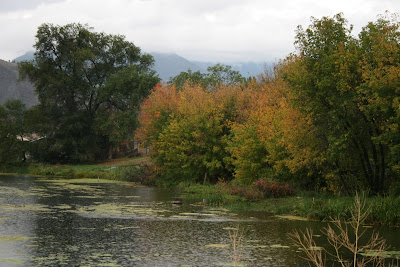
A few pictures of the countryside in the Autumn

Not this year's pictures - many of them taken on those wonderful
picture taking drives that Charles and I indulged in
when everything was particularly beautiful....


Tuesday, August 30, 2016

ABC Wednesday
The letter is H for William Ernest Henley


1849-1903

Probably known best for his poem "Invictus"
which reflects his resilient struggle with the deadly disease,
tuberculosis of the bone.


"I am and Master of my fate
I am the Captain of my Soul"

Henley lost his left leg below the knee when he was in his teens.
In 1873 his other leg was affected by tuberculosis
but thanks to the innovative treatment of Dr. Joseph Lister it
was not amputated.  

Henley stayed almost two years under Dr. Lister's care
and during this time he turned to writing poetry 
about his hospital experiences.
These poems are probably the most interesting of all for the present day reader,
as they depart from the traditional themes and imagery
of Victoria poetry and have an affinity in form
with Gerald Manley Hopkins and T.S. Eliot.

'In spite of his illness Henley was a strong and sociable man with boundless energy, 
excellent memory, enthusiasm and versatile mind.'

As much as I admire his poem Invictus
probably my favourite Henley poem is
"O Gather Me the Rose"

lovely words with a gentle admonishment
to gather joy as we find it and whenever we can.

O gather me the rose, the rose,
While yet in flower we find it
For summer smiles, but summer goes,
And winter waits behind it.

For with the dream foregone, foregone,
The deed foreborn forever,
The worm Regret will canker on,
And time will turn him never.

So were it well to love, my love,
And cheat of any laughter
The fate beneath us, and above,
The dark before and after.

The myrtle and the rose, the rose,
The sunshine and the swallow
The dream that comes, the wish that goes
The memories that follow!

William Ernest Henley fell from a railway carriage in 1902
and the accident caused the latent tuberculosis germ
to awaken.  He died on he 11th of July, 1903, a the age of 53.


For more interesting Hs visit here at ABC Wednesday
with thanks for Roger, Denise and Leslie
and all Helpers


Tuesday, August 23, 2016

G is for Goulash

ABC Wednesday
August 24th, 2016

The letter is G for Goulash


Not part of my repertoire, 
but I have such fond memories of the goulash made by a family friend, 
when I was a child.

And so the other day I made a pot of Goulash
and although not exactly enchanted by it
I was really very pleased, and vowed to make more. 

I made my Goulash American style,
 with ground beef and tomatoes and
elbow macaroni


But I am reminded of the wonderful history of
Hungarian Goulash
and the practically of taking along a
dish that cooks while you herd cattle.


This thick, hearty dish is popular with herdsmen in Hungary.
They make it in a cast-iron kettle hung above an open fire, out in the fields. 

The herdsmen have the best ingredients at hand -  prime quality beef, and as it cooks while
they work it goes well with their lifestyle.

During the 19th century, when there was a general raising of
national awareness of Hungarian culture
language and 'gastronomical delights'
this peasant dish came to be accepted by town folk, and even the elite.

Today it is a tourists' favourite, and is featured
in all the best restaurants in Budapest, 
throughout Hungary, and with
slight national variations in many other
countries of Europe.

You ask for Gulyas - Hungarian for Herdsman.

Here is a Classical Hungarian Goulash Recipe

Heat up a couple of tablespoons of oil or lard in a heavy pot and braise 2 medium chopped up onions
until they are a nice golden brown, - 
then add two cups of beef cubes, stirring a bit until they become brown.

Add 2 cloves of garlic, 2 diced carrots, 1 diced parsnip, a couple of celery leaves 
and 2 or 3 medium potatoes, sliced, 
i tablespoon of Hungarian paprika and
a teaspoon of caraway seed.  
along with one bay leaf. some ground black pepper and salt to taste.

When the vegetables and meat are almost done add 2 medium tomatoes, 
peeled and chopped and the sliced green peppers.
Let it cook on low heat for another few minutes.

If you want to be really Classical here is where you
bring the mixture to a boil and add the CSIPETKE, or
small Hungarian noodles. 


A Hungarian Herdsman in Traditional Finery

doubtless ordering a bowl of Goulash.
Hungarian Style.


Here is a Hungarian Folk Song and some scenes that will perhaps
give you a taste of Hungary and its culture.


For more interesting Gs click here at ABC Wednesday,
with thanks to Roger, Denise, Leslie and
all grand helpers.

Monday, August 15, 2016

F for Fiddlehead

ABC Wednesday
August 17th, 2016

The letter is F for Fiddlehead


Chock full of vitamin A and C fiddlehead greens are a nutritional powerhouse rich in antioxidants, and a great source of fibre and omega-3 fatty acids.  The furled fronds of a young fern, the fiddleheads are harvested early in the season before the frond has opened and are cut fairly close to the ground.

Over-picking will eventually kill the plant, and it is important to maintain sustainable harvesting, whether you are growing them commercially or out in the woods  where it is damp, and the ferns grow freely.


Fiddleheads have been part of traditional diets for centuries in much of France, across Asia, and among Native Americans.  With a flavouring similar to asparagus this springtime veggie goes well in soups, salads and pastas - and quiche too!

Bring some potatoes, celery, onion, water, stock and salt and pepper to a boil, - cover and simmer about twenty minutes or until veggies are tender.  Add fiddleheads and simmer until they are tender too and you have a nice creamy fiddlehead soup.


Of course there is a Band, too that is called Fiddlehead Soup, - one which has a delightfully unique sound well known in the community in which they play (in eastern Ontario, Canada)

Fiddlehead Soup sings and plays English, Scottish, Irish, French, Spanish, Icelandic, Finnish, Northern Sami, Uyghur and Italian music, as well as their own compositions.  (I am not familiar with Uyghur music, but I plan to listen and discover.....


Glenna Hunter, Doug Hendry and Ursa Meyer. Band members.
The ladies are mother and daughter.


There is also a well known Canadian Literary Magazine called The Fiddlehead, 
and a Radio Pod Cast associated with it, both of which can be
found online.


For more interesting Fs click here to visit ABC Wednesday,
with thanks to Roger, Denise, Leslie and those helpers who frantically visit
the contributors to ABC Wednesday each week.

Saturday, August 13, 2016

This and That

Saturday, August 13th, 2016

I sit down to compose a post, without a thought in my head about what I will write about.  The cat joins me, pussy footing it between the keyboard and the screen, as is her wont.

She visits me in the Loom Room too, where I am still struggling with the knots that secure the new warp to the end of the old warp - the dummy warp, - cosying up close, kissing my wrist.  I try to slip in to tackle this task when she is outside in the garden, but somehow she knows and before I have two or three knots tied she is there ...mother's little helper!!!

No warp knots tied today, but I did make a most delicious Italian Prune crumble - had a bowl with a smidgin of ice cream and felt thoroughly spoiled.  The kitchen is full of fruit and herbs and today I bought some pickling salt to make bread and butter pickles the easy way (recipe follows).


The Cobbler is 'just a cobbler' but I added a
little pear liquor to the filling and probably a bit more butter so that the topping was lovely and rich.
Prunes don't look terribly appetizing, but a half a cup of brown sugar, a half a cup of white, some crispy oats and they are heavenly.....

The pickles are a cinch to make - the recipe from my dear friend, Margaret, who alas is gone (as are so many of my dear friends...)

You need to bring to a boil 4 cups of vinegar, 4 cups of white sugar, one quarter cup of pickling salt, one and one half teaspoons of celery seed, one tsp of tumeric and one and one half  teaspoons of mustard seed. Pour over thinly sliced pickling cucumbers (as many as you can get your hands on..)
Stir every day for five days, and then store in the refrigerator in ice cream pails until they are all gone.  So tasty, and so convenient....

After a cool July the weather has been exceedingly warm, - 36 degrees C today,   I went early to town, while the night coolness was still lingering, and took the car.  It has been my determination to get familiar and happy with using Charles' electric cart, but it being one that he used in the orchard, built sturdy and big, I feel it somewhat cumbersome and for the same reason that I don't really like to admit that I am almost ninety-two, I am not happy being seen riding around on a cart for 'old people'. I believe this condition is caused by too much ego, and I do try to be more humble and accepting.......

Perhaps I will take the cart to ukulele practice tomorrow and I can practise being 'umble as well as strumming "Hello, my Baby" and "Buffalo Gals".

I listened to a video of the British Ukulele Orchestra and was so impressed
 and filled with admiration!


And I can't even whistle!!!!


Tuesday, August 09, 2016

The Lyrical Painter

ABC Wednesday
August 10th, 2016

The letter is E for Sir Alfred East


Sir Alfred East was born on the 15th of December 1844 in Kettering, Northamptonshire.  He studed at the Glasgow School of Art but was in his late thirties when he left the family shoe making business for the precarious calling of professional artist.

For the next thirty years he immortalized the rich landscape of Britain, 
and was known as a 'lyrical' painter.

The Reedy Mere and Sunlit Hills

His romantic landscapes show the influence of the Barbizon school and in 1906 he published a book, "The Art of Landscape Painting in Oil Colour".

The Lonely Road


An Autumn Afterglow

Alfred East  achieved honours worldwide.

  He was awarded a knighthood in 1910 by King Edward V11,
and died in London on Sunday, September 13th, 1913.


I would love to have the Reedy Mere and Sunlit Hills hanging in my home!!!

For more interesting Es visit here at ABC Wednesday
with thanks to Roger, Denise, Leslie and all energetic helpers..

Tuesday, August 02, 2016

D is for Dervish

ABC Wednesday

The letter is D for Dervish

Not the traditional Persian Whirling Dervish of the Sufi


but that icon of Irish music, the Dervish Band (originally The Boys from Sligo)


Although the name derived from the Sufi, (known for ecstatic dancing) might seem to be an odd choice for an Irish band the parallels to Irish music are strong - the Dervish being people who become enraptured by the music, and swept away spiritually.

Cathy Jordan, the lead singer with the band, says, "There is so much of that present in the music that we play, that sense of  being caught up in a higher love, a profound spirituality.  It seemed like a
good choice for a name."


For more interesting Ds drop into ABC Wednesday, here.
With many thanks to Roger, Denise and
dedicated helpers...

Sunday, July 31, 2016

The Garden in Mid-Summer

Sunday,  July 31st, 2016


Great is the sun, and wide he goes
Through empty heaven with repose;
And in the blue and glowing days
More thick than rain he showers his rays.

Though closer still the blinds we pull
To keep the shady parlour cool,
Yet he will find as chink or two
To slip his golden fingers through.

The dusty attic spider-clad
He, through the keyhole, maketh glad;
And through the broken edge of tiles
Into the laddered hay-loft smiles.

Meantime his golden face around
He bares to all the garden ground,
And sheds a warm and glittering look
Among the ivy's inmost nook.

Above the hills, along the blue,
Round the bright air with footing true,
To please the child, to paint the rose,
The gardener of the World, he goes.

Robert Louis Stevenson, Summer Sun


The weather in June and most of July was lovely.  Not too hot, - little showers almost
every late afternoon, and sometimes the wonderful sound of raindrops on the roof, 
all through the night.

It caused the gardens and the grass to sigh with delight and grow by leaps and bounds.


However, this last week, as we anticipate August, the Sun has harnessed
all his golden steeds and they have a merry ride through blue sky and summer clouds,
while we, down here in the valley, rise early to enjoy
the coolness of the morning, water all the pots and 
do essential garden chores, and then busy ourselves with
blinds drawn, fans whirring and the A/C drying out
all the fresh summer air.

We had no air conditioning on the farm, but we set a sprinkler on the flat
roof of the house, and just the sound of water falling outside
the windows was enough to excite the imagination into some semblance of coolness.

Mornings see me out early watering pots and putting aside
pails of water for those plants that start wilting in the noonday sun.


The beds retain the moisture more efficiently, and there is the usual little jungle
that passes for an English garden.  Truly, it is too riotous
with tall yellow barn flowers and rudabeckia to qualify as a beautiful
pastel English garden, but where the perennial sweetpeas provide a background
for the purple bee balm there is a faint hint.....


Cast your eyes elsewhere though and it's mid-summer-madness-in-yellow, most everywhere.


The lilies have been lovely, - especially the Regals with their intoxicating scent.

Only this one red lily remains, - it surprised me one morning amongst all the yellow daisies

This last week the pink roses at the front gate have begun their second flush, but what really thrills me is the replacement  for the Abraham Darby, lost to the frost.

It is not vigorous, but very sweet and nicely scented, and I think it will do well in this more protected spot.

(the pretty apricot rose down below is the Abraham Darby, - blogger won't let me move it here where it belongs - and I don't suppose I will be able to squeeze Mister
Lincoln in here either, so I will add him down below, as he has been blooming continuously amongst the scarlet Bee Balm)

And the phlox - in full bloom in both the front and back gardens,  It makes me dream of a 'moonlight' garden, with its wonderful white virginity.

The oleander that spends the winter indoors is blooming its heart out this year, and has grown about four feet tall - it will have to be repotted.


The piece de resistance at the moment is the Rose of Sharon that guards the steps to the house.


Not the tidiest of shrubs as it drops its lovely blooms each day,
but spectacular and very eye-catching....

The little rainy season brought us some gorgeous skies, and by slipping out the back
I was able to get some nice pictures, - even here in town with all the wires and poles.


For those of  you who acknowledge the White Rabbit and are inclined to put any faith
in his ability to bring luck to the dog days of August, don't forget,
tomorrow morning, - first thing - toss him a verbal obeisance.....